

Center for Electrology’s training program is designed to be comprehensive, flexible, and rooted in real clinical experience.
Students complete a total of 600 hours of training, combining flexible at-home theory instruction with in-school, hands-on clinical practice. This structure allows students to build a strong scientific foundation while developing technical precision, confidence, and the real-world readiness required for professional electrology practice.

Hybrid • Learn From Home
The theory portion of the program is completed through a hybrid learning format, allowing students to study from home on a flexible schedule while remaining supported by instructors.
Training covers methods for all skin and hair types, unlike some schools that focus on a narrower treatment-method scope.
This foundational coursework covers:
- Anatomy & physiology
- Electricity as it relates to electrolysis
- History of electrolysis
- Theory and application of all electrolysis modalities
- Client services, safety, ethics, and professionalism
Students are able to move through the material at their own pace, building confidence and understanding before entering the clinical environment.

400 Hours of Hands-On Clinical Training
In-School • Real Clients • Real Experience
The practical portion of the program takes place onsite at our school and may be completed full-time or part-time, with scheduling flexibility available within school hours to support individual student needs.
Hands-On Learning, Step by Step
Clinical training begins with students working on themselves, an essential part of learning proper insertion techniques, current levels, and sensation awareness. This step builds precision, confidence, and a deeper understanding of the client experience.
Once foundational skills and basic modalities are mastered, students progress to:
- Working on classmates under direct instructor supervision
- Treating members of the public as clinic clients
This intentional progression ensures safety, technical accuracy, and professional readiness at every stage of training.
Training on Diverse Equipment
Students train on a variety of professional electrolysis machines, rather than being limited to a single brand or system. This broad exposure helps students understand how different equipment functions, adapt to varying technologies, and make informed decisions when investing in their own equipment after graduation.
Preparing Students for Real-World Practice
At Center for Electrology, training goes beyond technique. Students are encouraged to actively market themselves during their program to help bring in clients for practice. This real-world experience supports:
- Client communication and consultation skills
- Confidence building through repeat treatments
- Preparation for independent practice or clinical employment
Oregon’s Only Licensed Electrology School
Center for Electrology is proud to be the only state-licensed electrology school in Oregon.
- ✓ State-Approved private trade school
- ✓ Meets Oregon licensing requirements
- ✓ Hands-on clinical training
- ✓ Education built for real-world success
Real Clients. Real Confidence.
Our students benefit from a steady, diverse stream of clients seeking student services. This provides meaningful experience across a wide range of hair types, skin types, treatment areas, and client needs — not simulated practice or limited exposure.
This approach allows students to:
- Build confidence quickly
- Develop strong consultation and treatment-planning skills
- Graduate with real client experience and continuity of care
- Enter the field prepared — not just certified
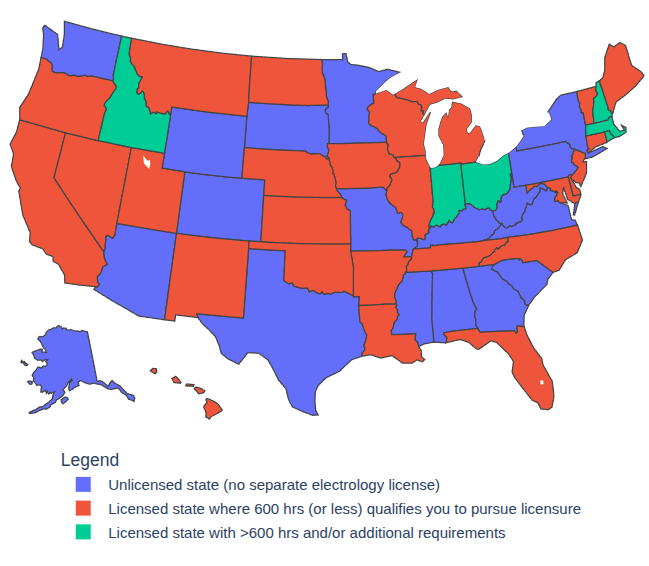
More Than Just Oregon
Training in Oregon means training with portability in mind. Oregon licensure is widely considered one of the best foundations for reciprocity, and our 600-hour program aligns with education standards used by many state licensing boards.
By meeting Oregon’s rigorous requirements, students graduate with credentials that support long-term flexibility—whether practicing locally or planning to relocate—without being limited by geography.
Licensure requirements vary by state. Eligibility for licensure, endorsement, or examination is determined by each state’s regulatory boardStudents from outside Oregon, including California, can review location-specific planning details on our California electrology training page.


